Language & Literacy
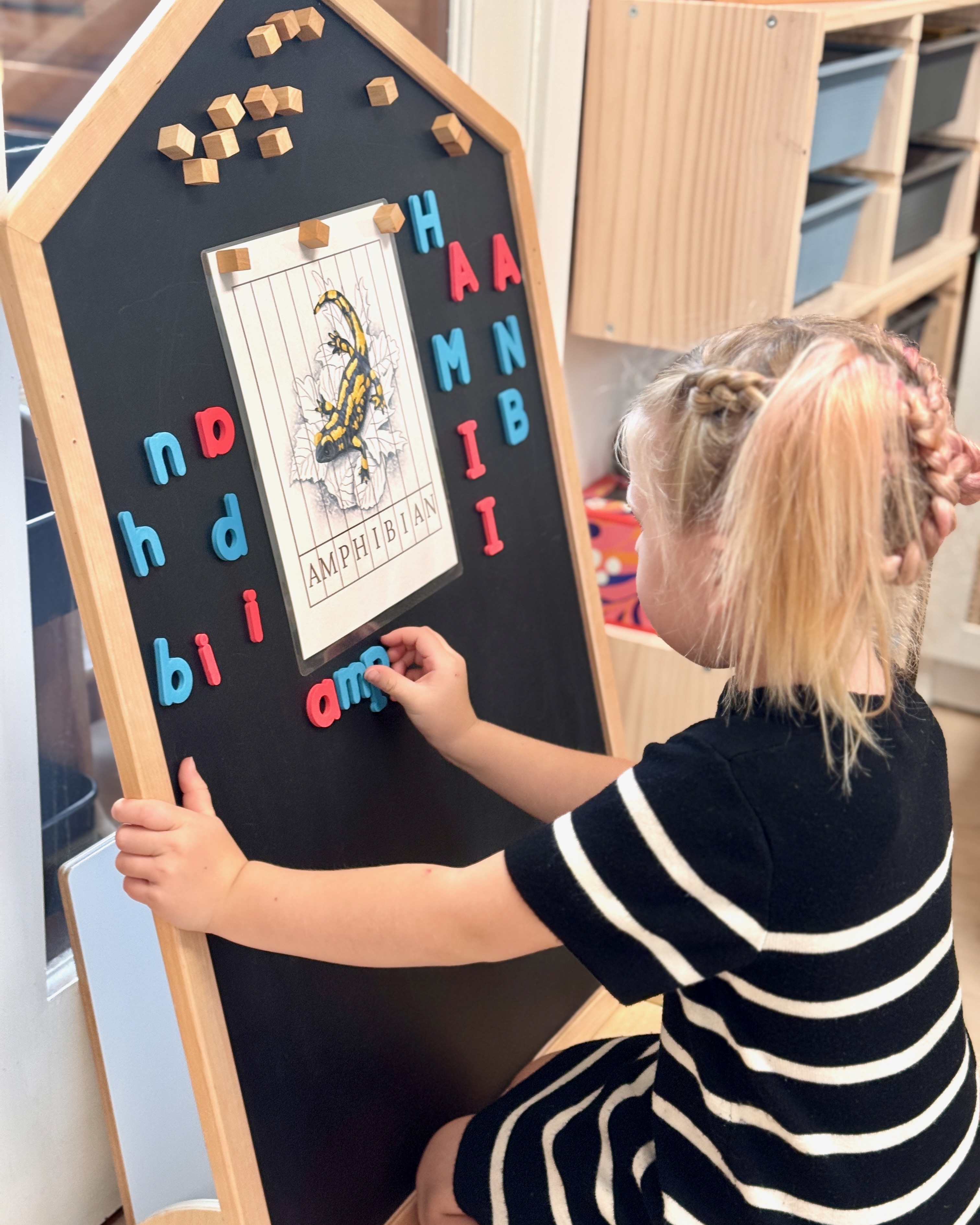
Books, conversations, storytelling, letter awareness, phonics exposure, and meaningful new vocabulary.
Curriculum
Children build knowledge by touching, testing, creating, discussing, and returning to ideas from new perspectives.
Across Every Investigation
Books, conversations, storytelling, letter awareness, phonics exposure, and meaningful new vocabulary.
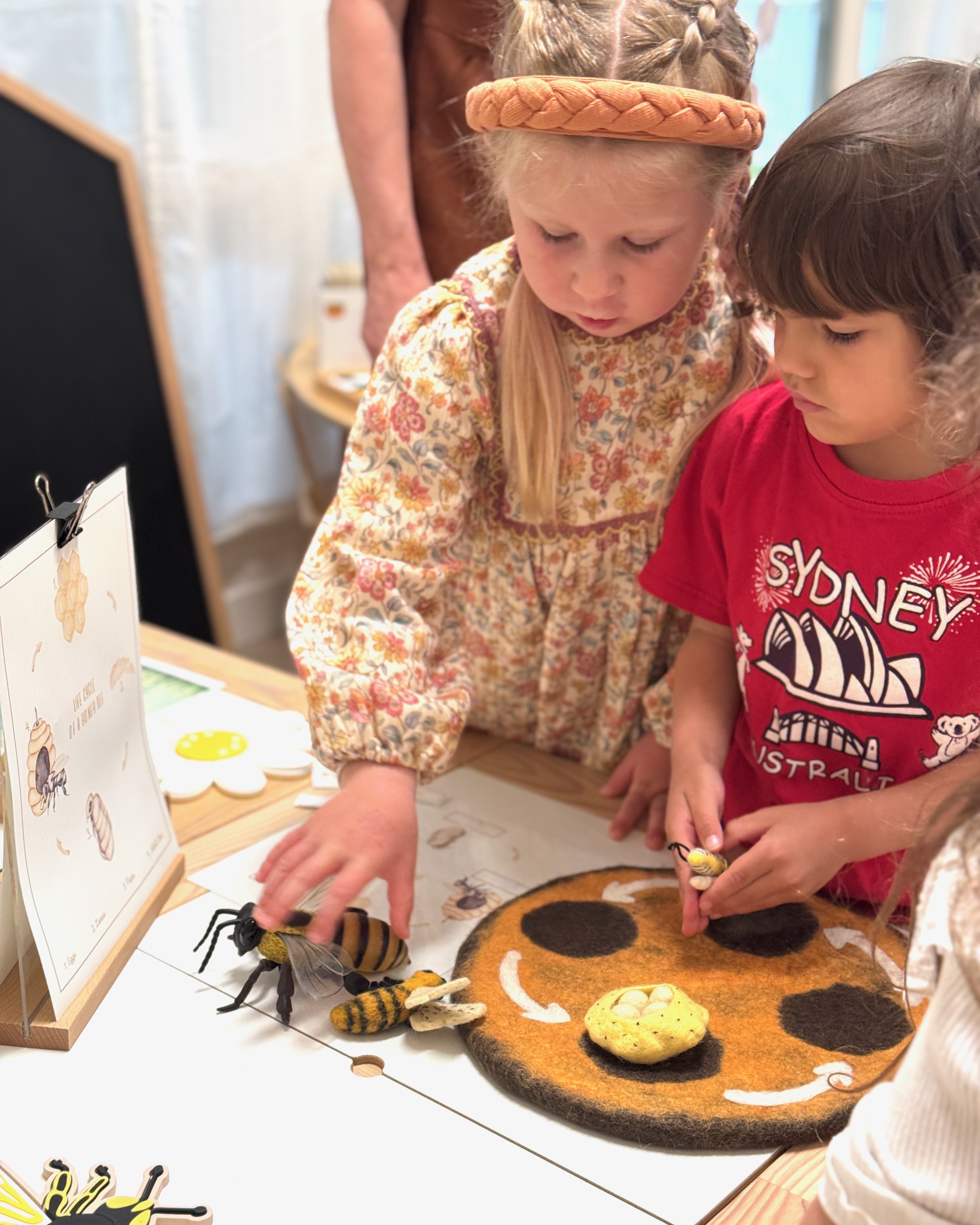
Observation, classification, cause and effect, life cycles, nature, experiments, and thoughtful questions.
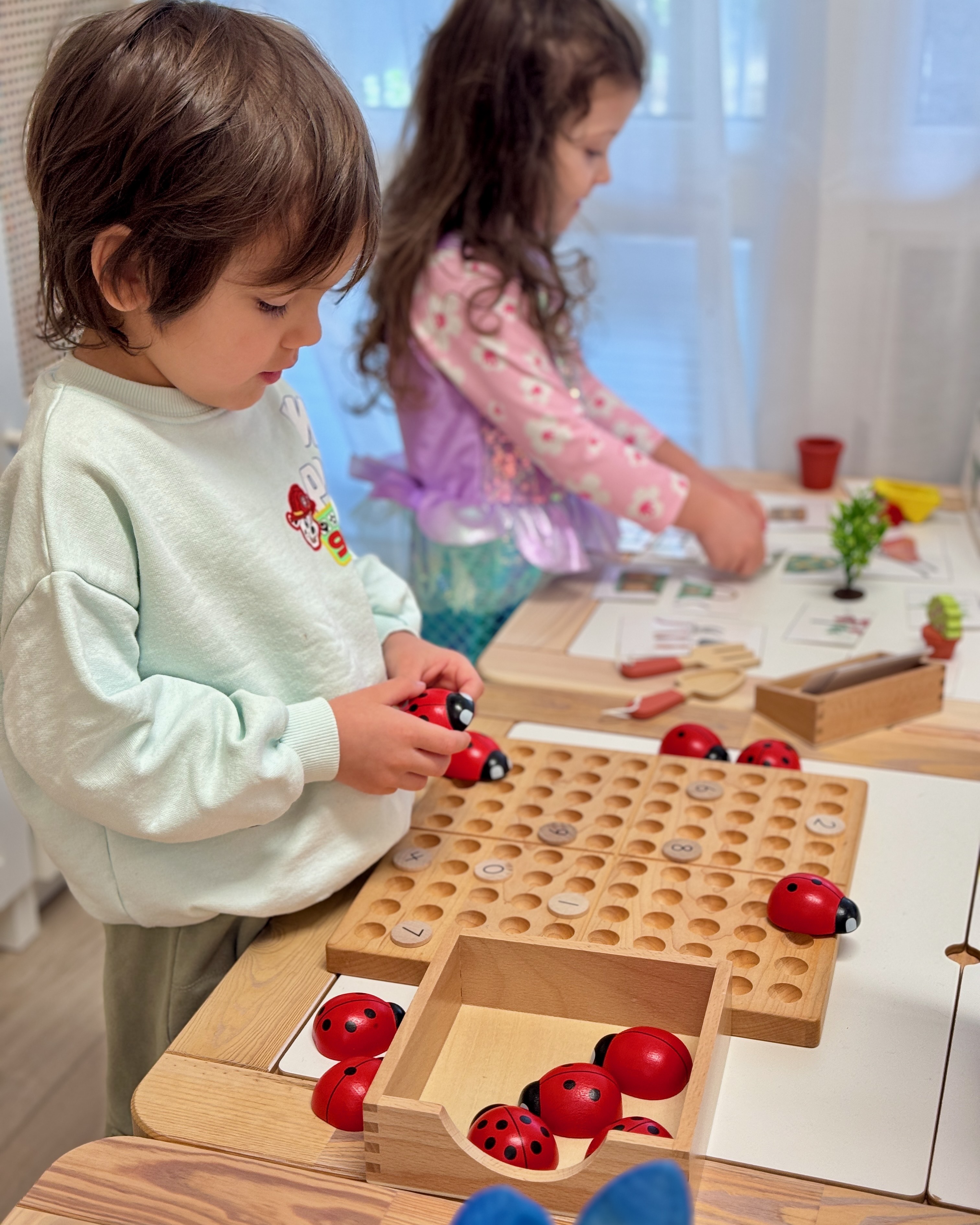
Counting, quantity, patterns, sorting, comparing, measuring, spatial relationships, and problem-solving.
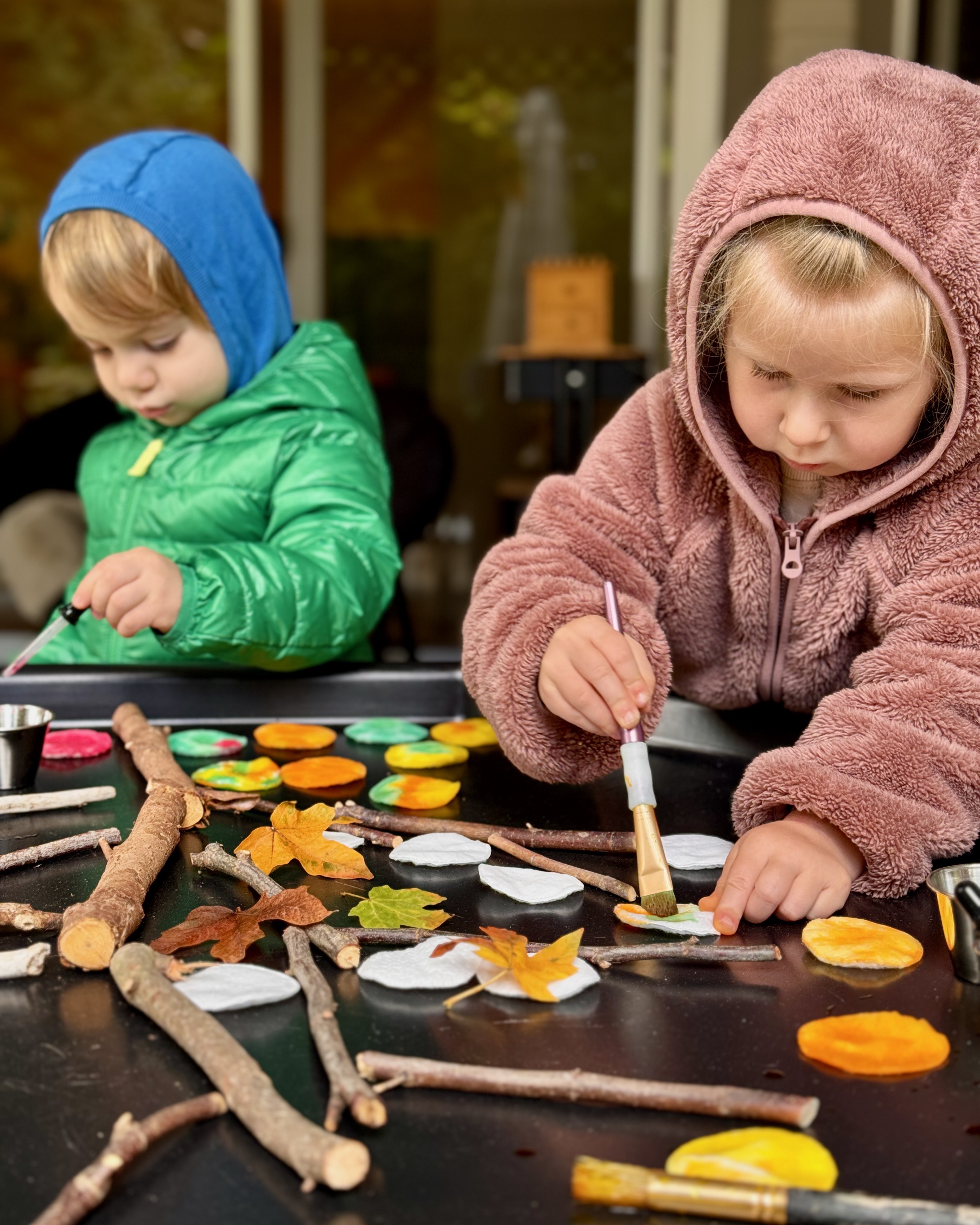
Open-ended art, representation, building, color, texture, planning, and creative decision-making.
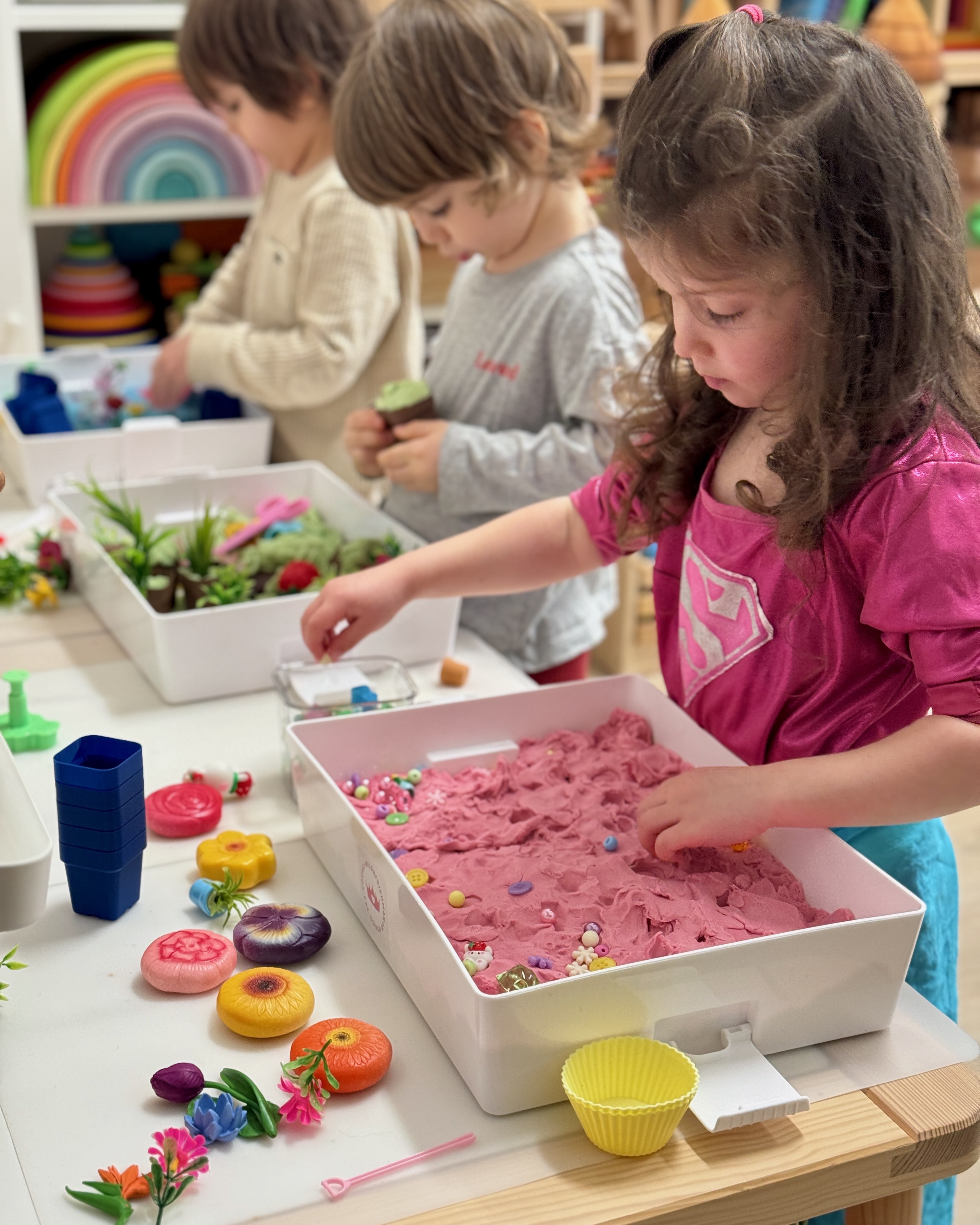
Invitations that make concepts tangible while supporting focus, fine-motor strength, and self-regulation.
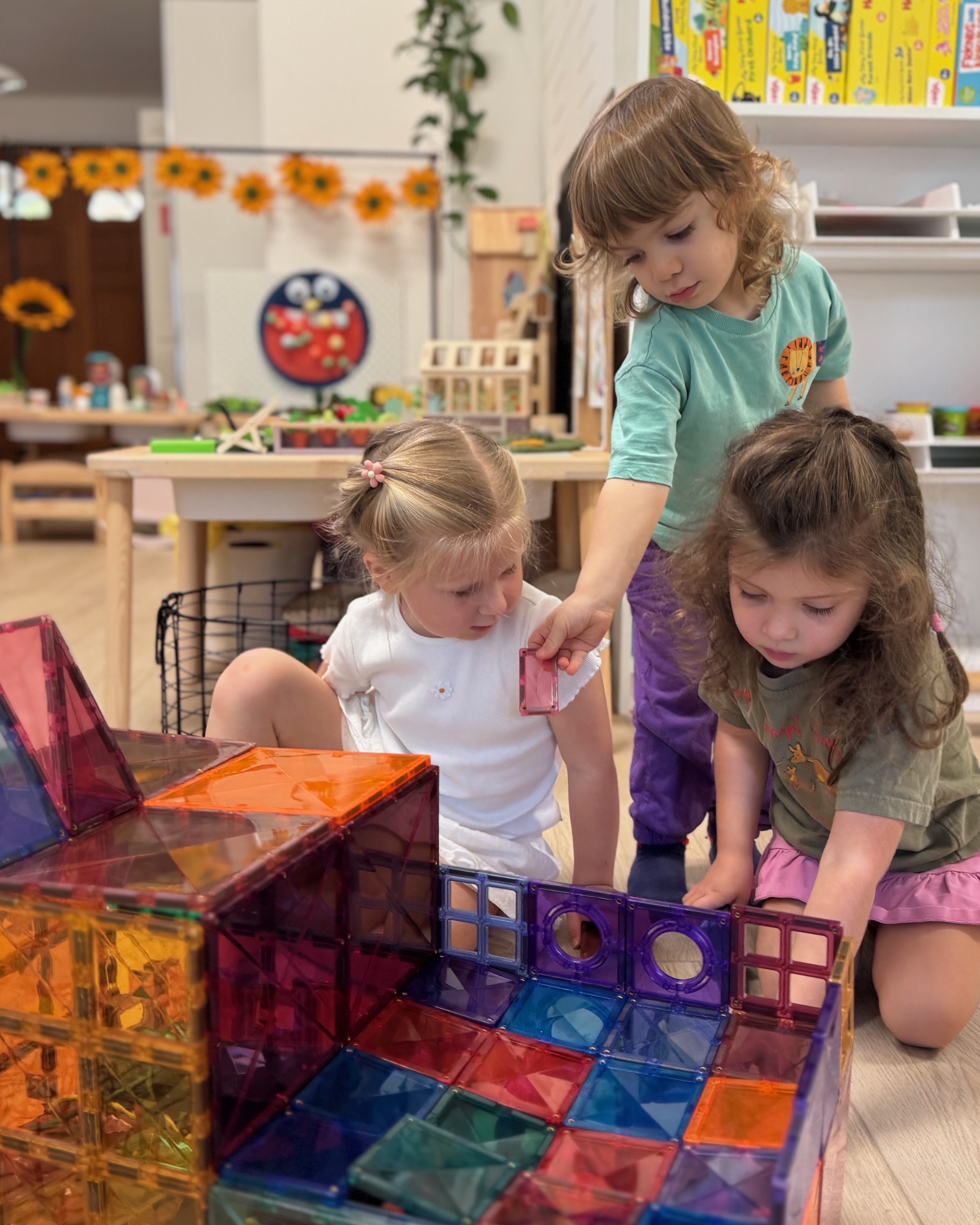
Collaboration, communication, independence, confidence, responsibility, and participation in a group.
Connected Learning
Topics may change weekly, or one week may build directly on the last. This flexible structure keeps curiosity alive while allowing children to go deeper when an idea has more to offer.
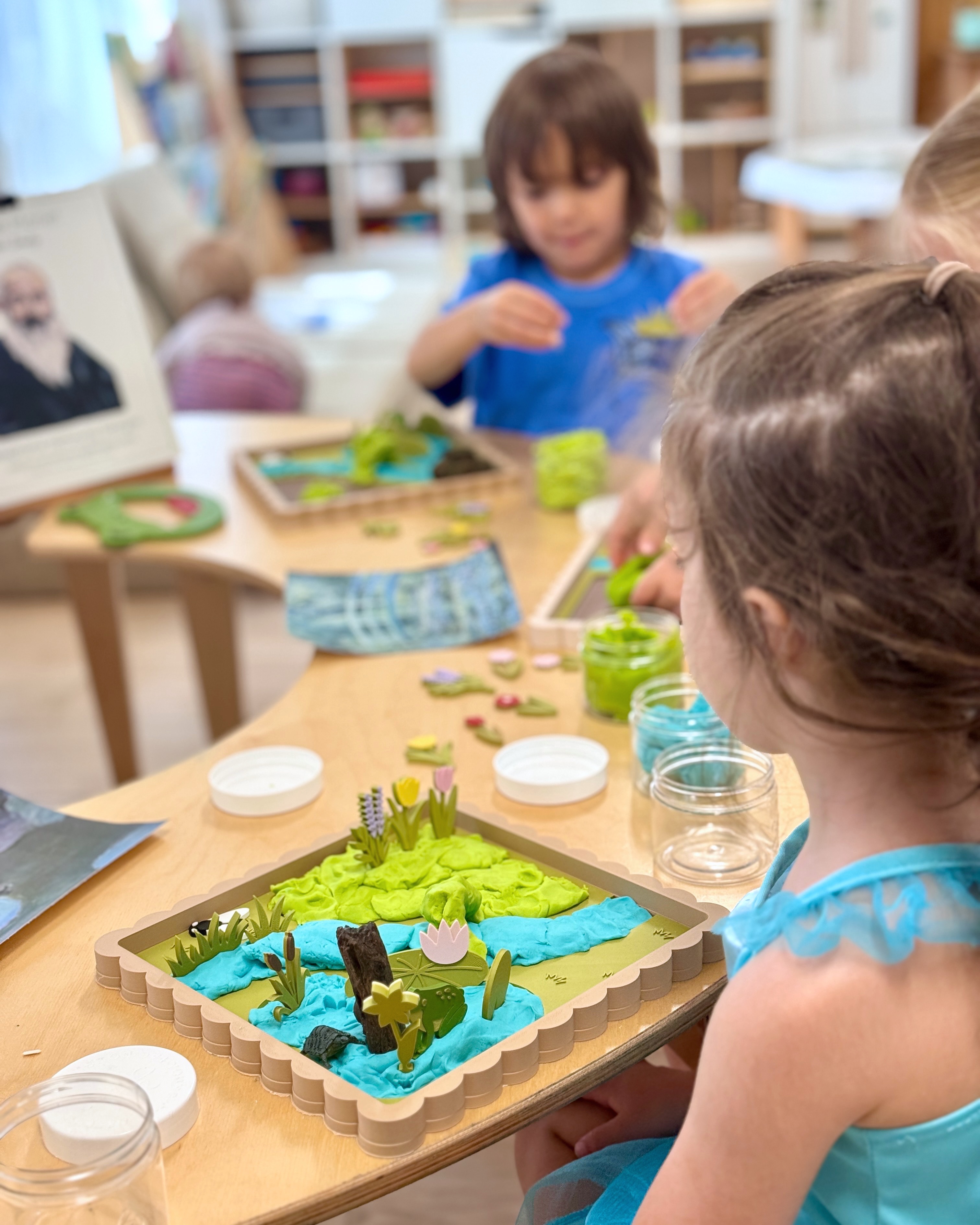
A sequence might move from pond life to frogs and then amphibians. Children encounter new vocabulary, revisit familiar concepts, compare details, and form a broader understanding over time.
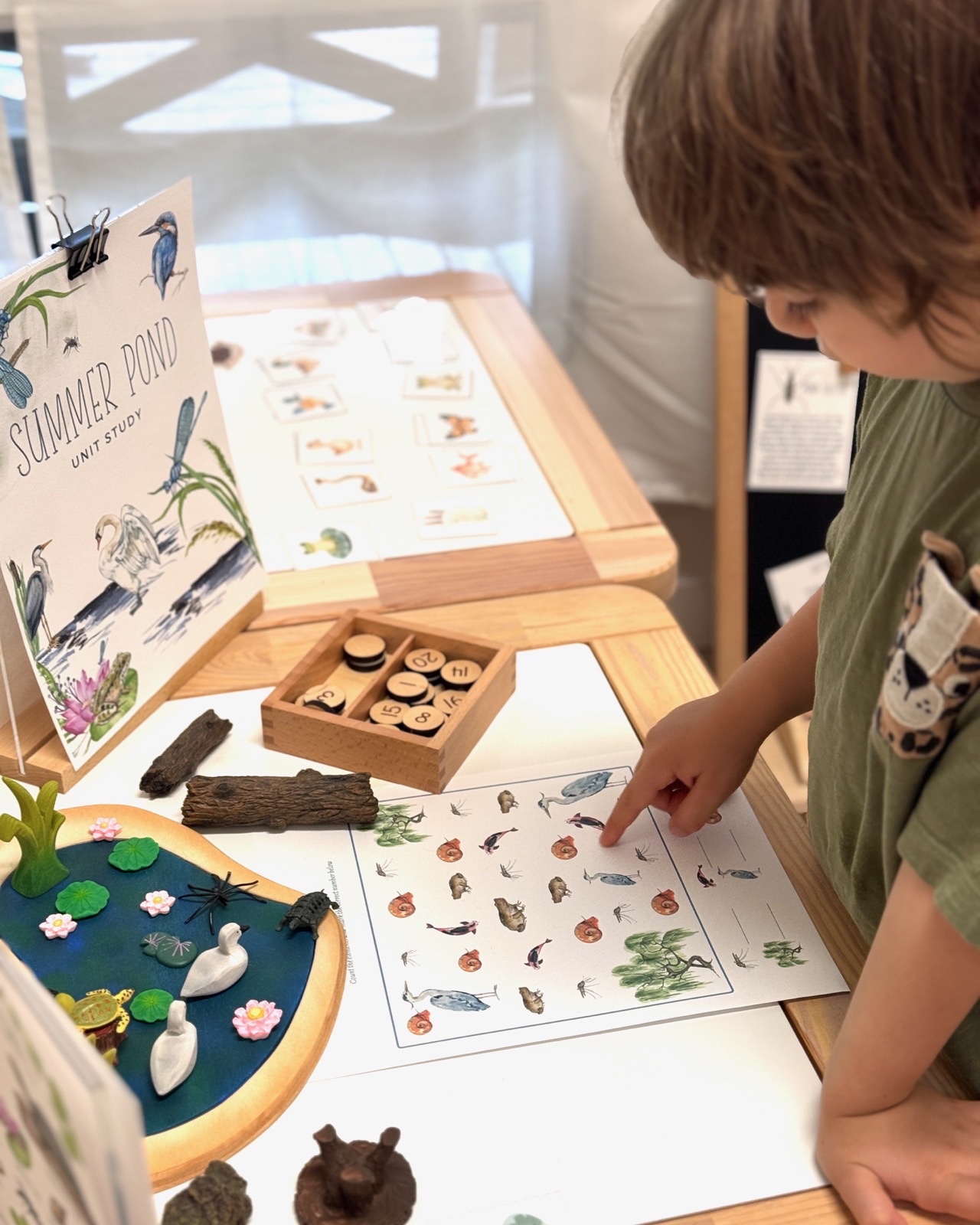
Example Investigation
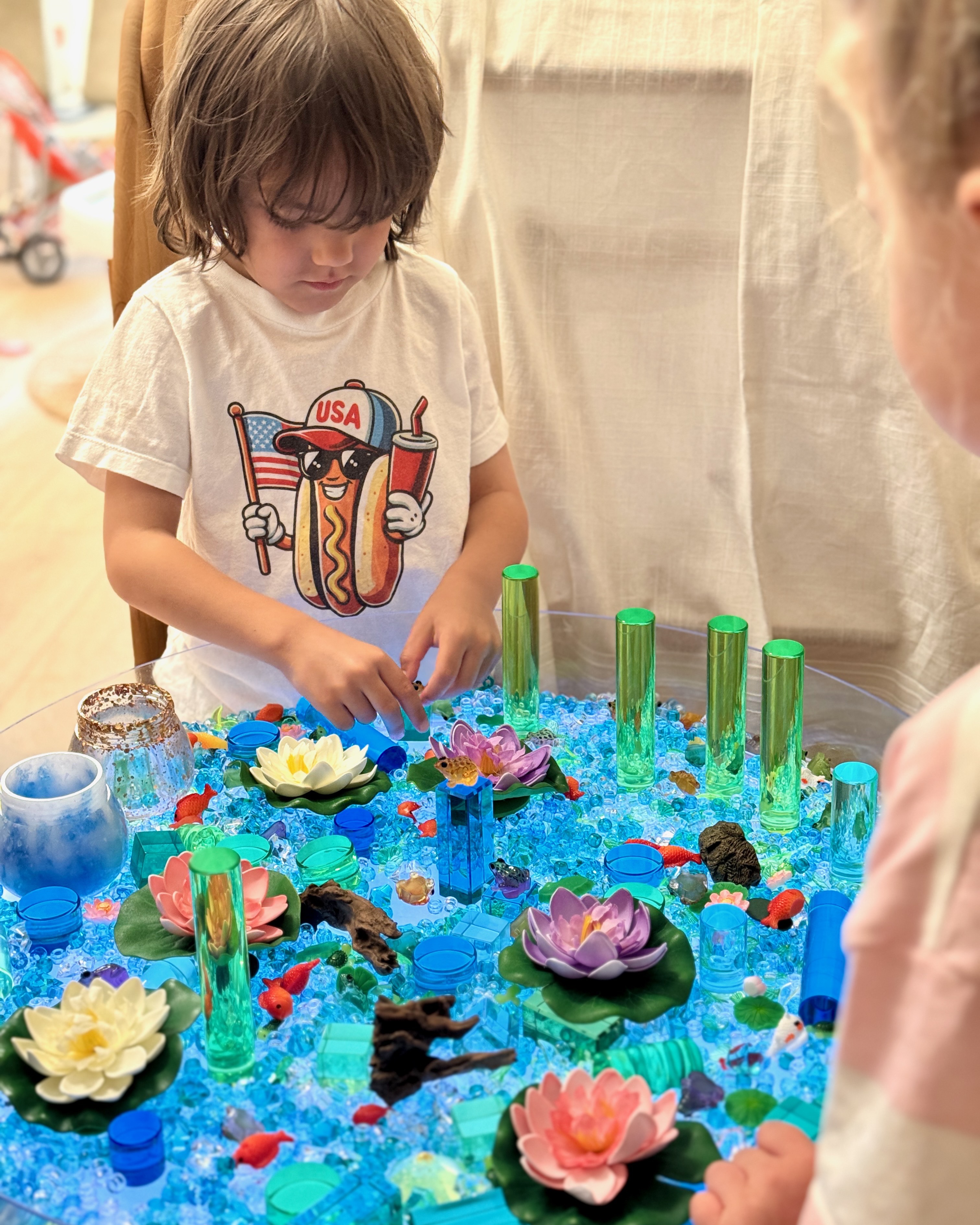 Explore
Habitats, water, plants, insects, birds, fish, and the relationships within a pond ecosystem.
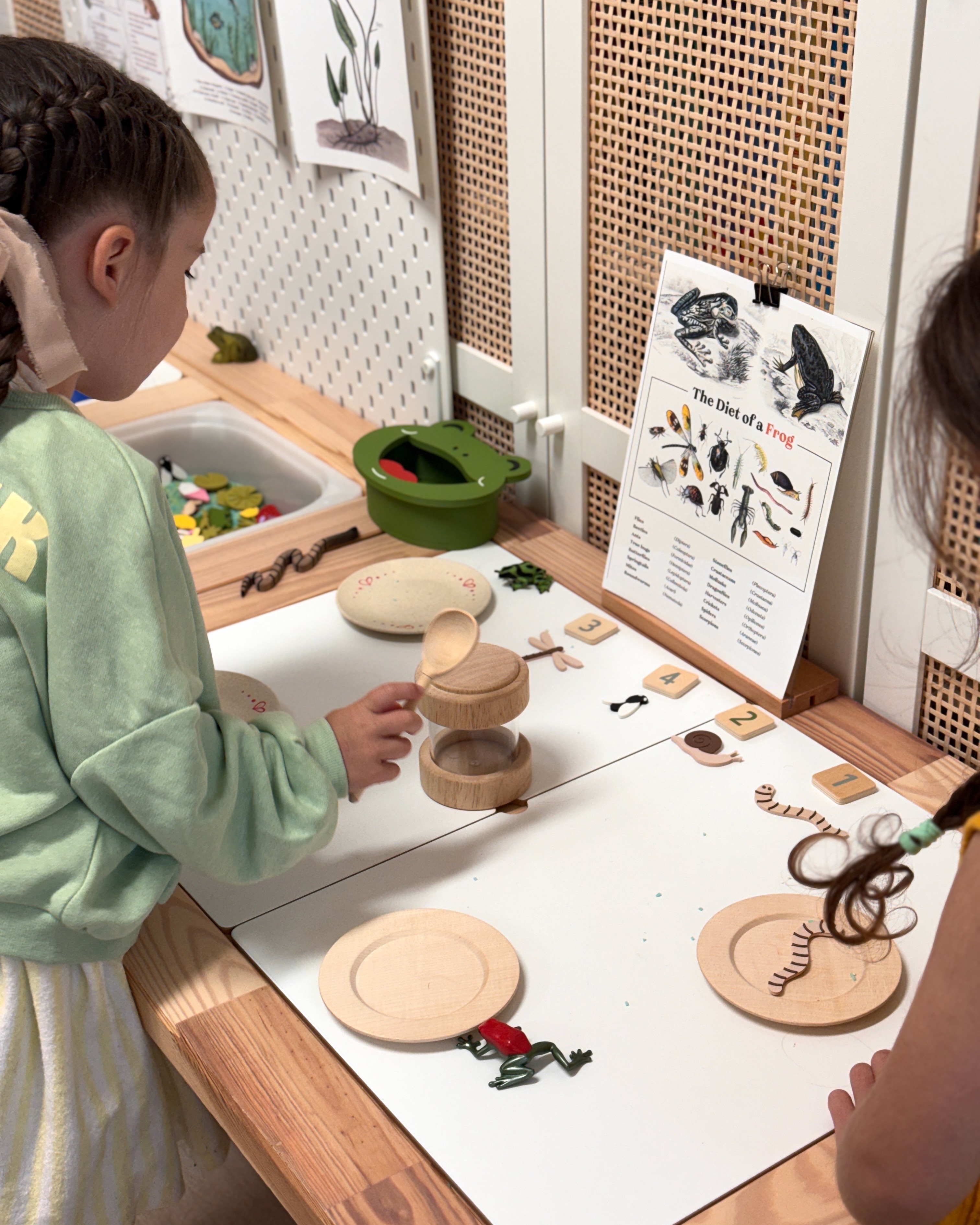 Look Closer
Life cycle, body parts, movement, sound, food, camouflage, and the needs of a living animal.
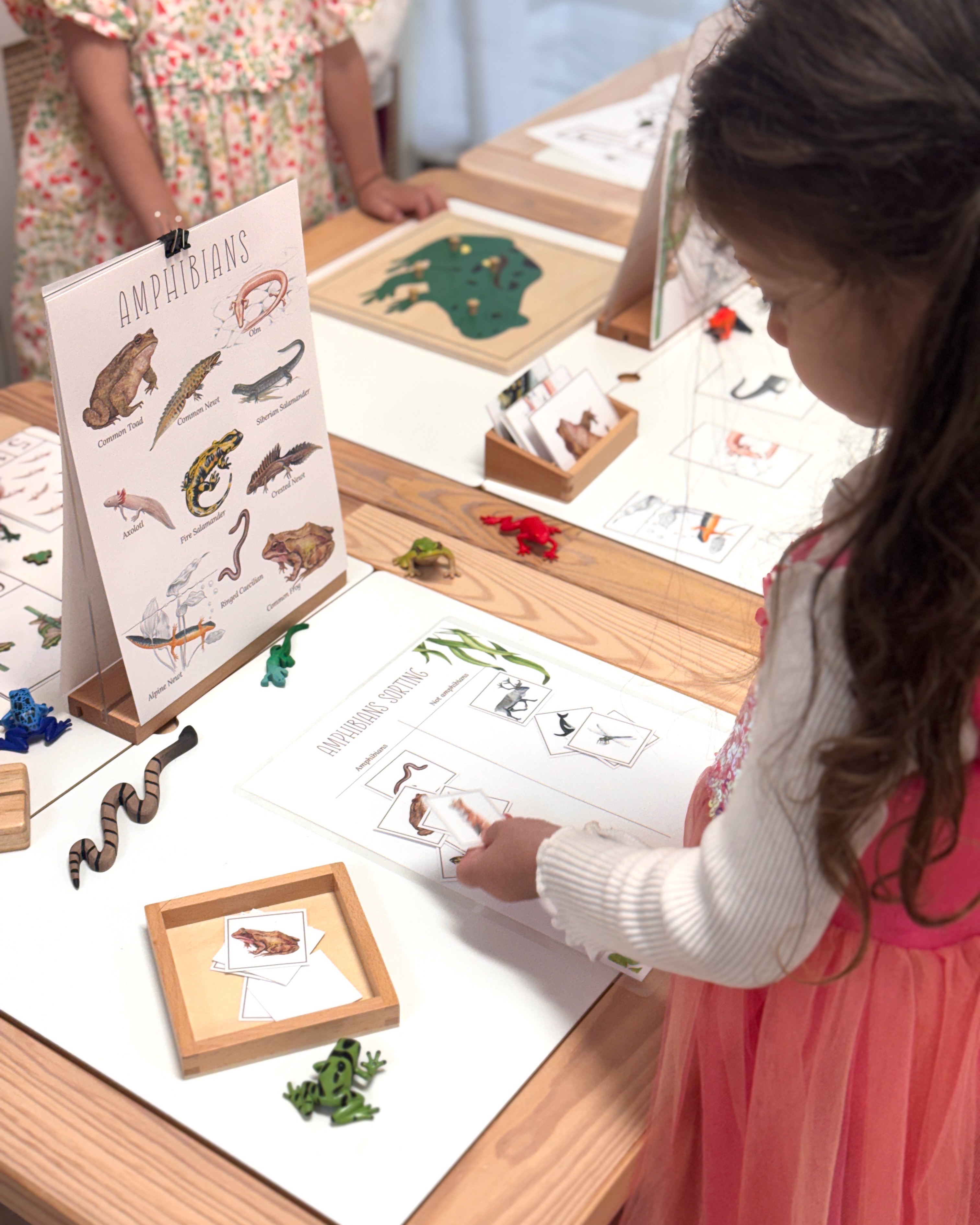 Expand
Similarities and differences among species, classification, habitats, adaptation, and scientific language.
Current Classroom Life
Our curriculum page explains the lasting approach. Instagram captures the changing weekly investigations, materials, projects, and discoveries.
Visit Instagram